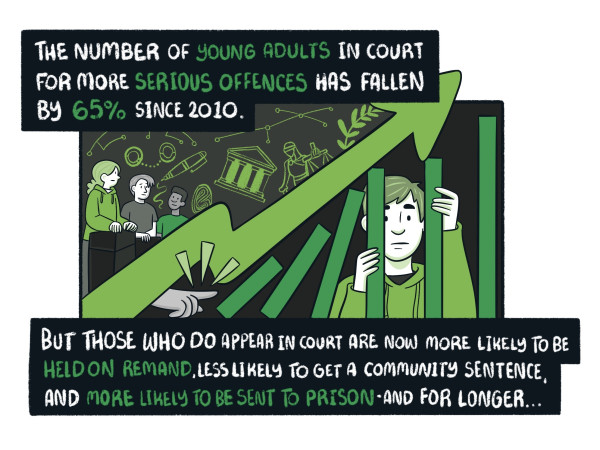
Last year, we analysed 15 years of data and found that the criminal justice system has become smaller in scale but tougher in its impact on young adults.
Fewer young adults are being processed overall, but those who are face harsher outcomes.
Our analysis also shows that gender and ethnic disparities persist, long after they were highlighted by major official reviews, including Baroness Corston's Review of Women with Particular Vulnerabilities in the Criminal Justice System (2007) and An Independent Review into the Treatment of, and Outcomes for, Black, Asian and Minority Ethnic individuals in the Criminal Justice System (2017), chaired by David Lammy. These disparities are not marginal or isolated; they are a consistent feature of how the system is currently operating.
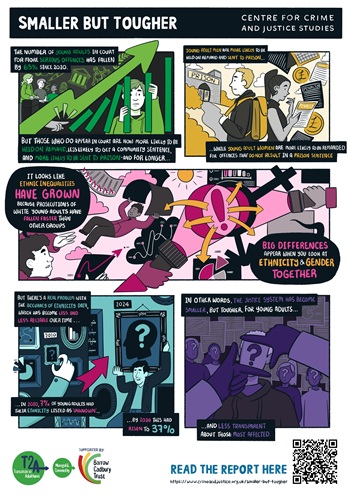 You can read the full findings in our initial report: Smaller, but tougher: How the criminal justice system is processing young adults.
We are now moving beyond the data to identify the problems more clearly: exploring what sits behind these trends and what they mean for youth justice policy and practice. This phase of the research is a stepping-off point for deeper engagement with practitioners, helping us move towards identifying practical routes to reform.
To support this, we are keen to speak with experts and senior practitioners across the criminal justice system. These conversations will help guide our work in four key areas:
- The use of remand for young women in cases that do not result in custodial sentences
- Ethnic disparities in outcomes for young adults across the criminal justice system
- The collection and use of ethnicity data
- Potential barriers to reform
We will be summarising our findings in an accessible briefing and plan to host a panel in 2026 to advance discussion, collaboration, and future action on these issues.
How you can get involved
There are several ways to engage with this work:
- Stay informed: Sign up to our mailing list to receive updates as the research develops.
- Share your insights: If you have experience, evidence, or perspectives relevant to any of the focus areas, we would welcome a conversation. Please contact us here.
- Panel participation: We plan to host a panel in 2026 to bring together policymakers, practitioners, and researchers to advance discussion and collaboration. If you are interested in taking part, please get in touch here.
We are grateful to the Transition to Adulthood Alliance, convened by the Barrow Cadbury Trust, for supporting this work.