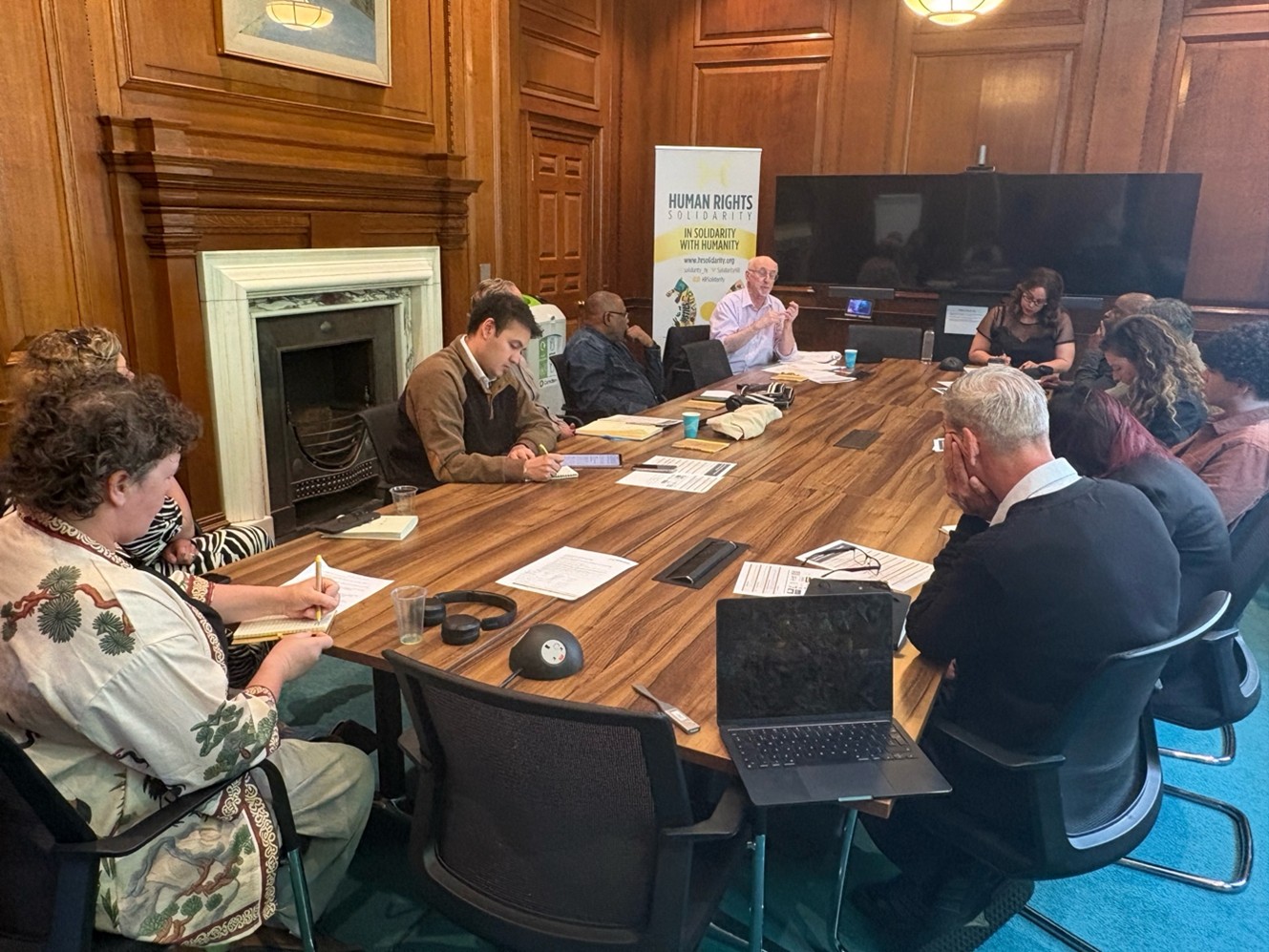
In April this year, Human Rights Solidarity convened a roundtable of experienced practitioners from diverse backgrounds and communities.
The subject was the prevention of serious youth violence, a challenge so often reduced to the shorthand of ‘knife crime’, a term that can obscure more than it reveals. What we heard instead was a richer, more urgent conversation: about young people growing up under profound pressure, and about who is best placed to reach them.
The Barrier No Training Can Cross
Young people involved in violence typically live in hard-pressed areas, carry the weight of adverse childhood experiences, and have learned to distrust authorities that have let them down. How do practitioners overcome these barriers? The answer from our roundtable was consistent and clear: lived experience is the most undervalued resource we have.
Practitioners present had made the long journey from street life and prison to community work. They spoke candidly about what that journey gave them: not just empathy, but credibility. As one contributor put it, having spent years behind a door, knowing what it sounds like, what it feels like, what the psychological architecture of that environment does to a person gives you a form of authority that no government official, consultant or academic can acquire in a classroom. Crucially, they pointed out that young people today are simply not listening to people two generations removed from their experience. A person in their mid-twenties who has recently come through the system, who still carries the language of that world, can still reach young people. That is the voice that needs to be deployed.
Being Met, Not Interpreted
A mental health practitioner at the table drew a distinction that stopped the room: people are not always met as they are. Under institutional pressure, professional responses to young people can become driven by rapid assessment, diagnosis and risk classification at the expense of genuine engagement. Young people learn quickly when a space is not safe for honesty. They adapt by becoming more guarded, more strategic, and less visible. From the outside, that looks like disengagement. From the inside, it is intelligence: a rational way of surviving environments that have repeatedly failed to hear them. The practical implication: stay curious for longer, delay categorisation, remain present without needing to define or correct.
Communities, Families, and the Pipeline That Must Be Interrupted
Several contributors pushed the intervention point earlier — not to the prison gate, not even to the school exclusion, but to the family and the pre-school years. The pipeline from fractured family to school disengagement to street involvement is well-evidenced. Research has shown that people convicted of serious violence have frequently experienced four or more adverse childhood experiences. These are causal pathways, not coincidences, and we heard one practitioner talk emotionally about their own family experience.
Our participants acknowledged something practitioners rarely say publicly: they feel a distance from today’s young people. The communities they grew up in had informal solidarity networks — neighbours, cousins, shared accountability. Those structures have largely collapsed. In their place, young people are drawn into what one contributor called a horrible vacuum, where their sense of belonging is manufactured by gang structures rather than genuine community. Effective practice must plug into networks that rebuild that belonging not replace it with programmes.
Policy Direction and What Must Come Next
The Youth Justice Board’s Child First strategy marks a meaningful shift toward centring children’s strengths, needs and lived experience. The UK Government’s 2026 commitment to give half a million more young people access to a trusted adult outside the home by 2035 is welcome. But our roundtable was clear on what policy frameworks often miss: the quality of that relationship depends entirely on who is in it. Buildings and programmes matter far less than the credibility and experiential authority of the person sitting across from a young man or woman who has learned not to trust.
Lived experience is a qualification. The people who have navigated these environments carry knowledge that cannot be obtained in a seminar room or a research paper. Until funding bodies, statutory commissioners and policymakers treat it as such: not in advisory roles alone, but in decision-making positions with real influence, the most resonant voices in this conversation will remain the least heard.
Continuing to speak out- please contact:
Burak Batuhan Karakus — batuhan@hrsolidarity.org | +44 758 404 091
Roger Grimshaw, Research Director, Centre for Crime and Justice Studies