We are working to build knowledge and understanding of the implications of the Equality Act 2010 for criminal justice, particularly for women’s prisons and other single-sex services.
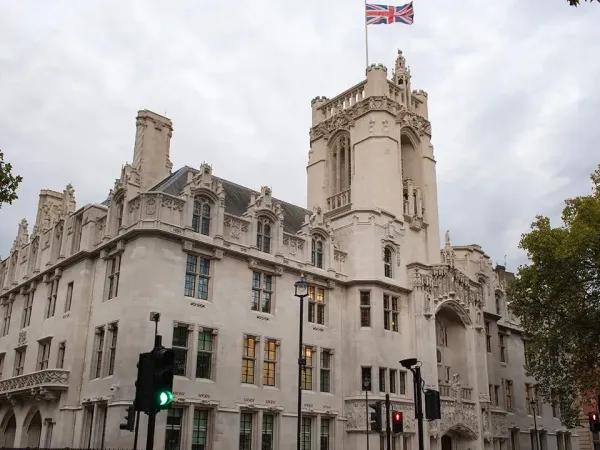
In April 2025, the Supreme Court clarified that “man”, “woman” and “sex” in the Equality Act 2010 means birth sex/biological sex. In coming to this judgment, the Supreme Court did not make new law. It clarified what the law has always been. In doing so, the Court went back several decades, concluding that “sex” in the law had always had a biological basis, something the Equality Act 2010 restated.
Following the judgment, the Government published, in May 2026, an updated code of practice for services, public functions and associations, from the Equality and Human Rights Commission (EHRC). The code of practice provides guidance to organisations on the implementation of the Equality Act 2010, including provisions related to single-sex services.
The EHRC code of practice states that for a service to be classed as single-sex, it must cater exclusively to members of a given sex. “If a service provider... admits trans people to a service intended for the opposite sex,” it states, “then... it is not a separate-sex or single-sex service under the Equality Act 2010”.
The Supreme Court judgment and EHRC code of practice have implications for criminal justice organisations that provide single-sex services, which will take time to work through. This includes prisons and probation premises, as well as civil society, private and public sector bodies working with them.
The Centre for Crime and Justice Studies has taken an interest, over a number of years, in the challenges and dilemmas of policy and practice in this area. We recognise that it is a sensitive area of public policy, with frontline staff, trade unions, civil servants, politicians and their advisors holding a wide range of views and perspectives on this issue. Many have felt pressured to ‘pick a side’, or have felt fearful of ‘getting it wrong’.
Through this project we are working to shift the discussion away from toxic arguments and towards the concrete and practical discussions on the challenges for criminal justice organisations when it comes to compliance with the law in relation to single-sex services.