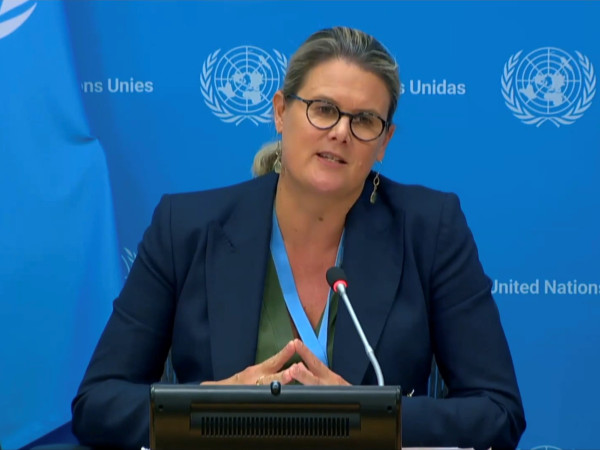
Last month, we interviewed Dr Alice Edwards, the UN Special Rapporteur on torture and other cruel, inhuman or degrading treatment or punishment.
The full interview will feature in an upcoming Prison Service Journal special edition on Imprisonment for Public Protection (IPP), and we are sharing the following excerpts in advance.
Dr Edwards has made a number of interventions to the UK government regarding IPP. Two joint letters from a group of special rapporteurs – in 2023 and then in 2024 – raised concerns about IPP and drew attention to the Justice Committee recommendation for a resentencing exercise. The government response to both letters suggested that resentencing would risk public protection. Addressing that concern, and reflecting on her current position in comparison to the Justice Committee recommendation, Edwards noted:
It is very similar, however I would also be accepting of a partial resentencing exercise, which means: set aside the very serious offences and deal with the large majority of IPP prisoners who are well beyond their tariff for crimes that ordinarily have a penalty between one to three years. The whole idea of criminal justice is that, once you've been punished, rehabilitated, and you've served your time, you should be released to get on with your life and not have a threat always hanging over your head that you could be brought back into prison for non-criminal reasons. So, I think, if a whole resentencing exercise could be done – absolutely, but the government has indicated very strong reservations to that, and so I would be content with, as the first step, a partial resentencing.
Speaking to her latest statement calling for judicial reconsideration of IPP sentences as well as the establishment of mental health pathways, Edwards outlined:
First of all, make sure the sentences are recalibrated to what they should have been, and second, for those that require mental health support or perhaps even need institutionalisation because of their conditions, this shouldn't be in prison. Institutionalisation would probably apply to a number of persons, whose cases should be carefully assessed by medical and judicial authority. Others released should have ways to access services in the community through the normal NHS, or even specialised, arrangements. Something really needs to be done because I've heard stories from the families of people who've been released and, because of lack of support within the community, they've really struggled and the families have struggled. I think we owe these prisoners a special arrangement so that they can really get back on their feet after years and years of injustice.
Edwards stressed the urgent need for a strategy to go on to the next steps, particularly when addressing IPP is a bi-partisan issue. She concluded that:
It’s also worth noting that the United Kingdom has an obligation under the Convention against Torture, Article 14, to provide an enforceable right to compensation if you have been subjected to psychological or physical torture. There is a long stream of candidates who, even now, or after they've been released, can take the government to court. I think the government is running against the clock on when that is actually going to start. It is only a matter of time. That could be a hugely costly exercise for the government if they don't do something about it now.


