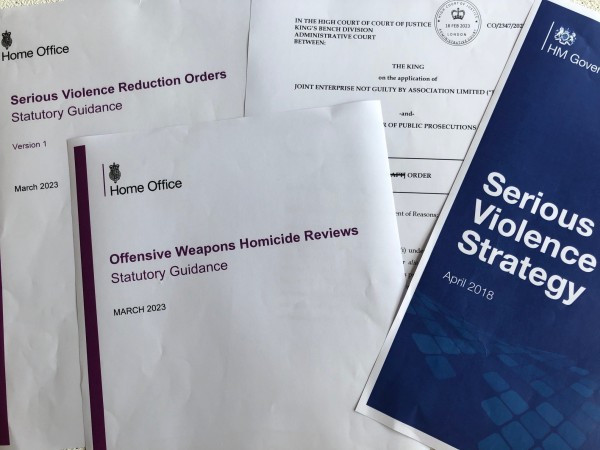
The government has published its evaluation of the Serious Violence Reduction Orders (SVROs) pilot, a year after the scheme ended.
SVROs, introduced in 2023, gave police the power to stop and search individuals convicted of a knife-related offence without the need for reasonable suspicion. The pilot ran across four police force areas and was promoted as a tool to tackle knife crime.
The evaluation, published by the Home Office, confirms that the orders increased stop and search activity among those subject to them, but raises questions about effectiveness and proportionality.
In a previous comment piece, Knife Crime, Stop and Search, and an Untransparent Pilot, we examined early evidence from the scheme, noting that most SVRO searches resulted in no further action.
The report finds that the SVRO power was used in 315 stop and search incidents. In just one case was a weapon found, a detection rate of 0.3%. This was lower than searches under the Police and Criminal Evidence Act 1984 and similar to those under the Misuse of Drugs Act 1971.
The evaluation highlights variation in how forces applied SVROs. Of 6,453 individuals identified as eligible, 468 orders were issued, with courts often rejecting applications as unnecessary, disproportionate, or unsupported by sufficient evidence.
SVROs enabled more frequent stop and search of those subject to an order, with some officers reporting searches on every encounter. While no strong quantitative evidence of ethnic disproportionality was found, the report raises concerns about impacts on vulnerable groups, particularly people experiencing homelessness.
The government has not yet set out whether it will roll out SVROs more widely. The findings are likely to inform ongoing debate about stop and search, given the low detection rates and concerns highlighted in the pilot.


