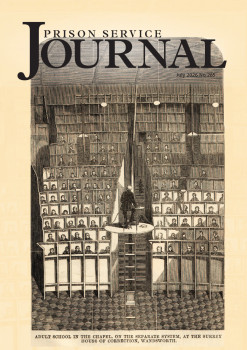
This special edition of the Prison Service Journal draws out the key themes from late 18th and early 19th century prison history that still have relevance today
Articles in this special edition – edited by Alyson Brown, Helen Johnston and Ben Bethell – highlight what historical work can bring to a 21st century discussion of the prison.
Clare Anderson, Tammy Ayres, Mellissa Ifill, Kellie Moss and Kevin Pilgrim begin the edition with a consideration of the extent to which current prison systems can be profoundly shaped by their colonial history. Meanwhile, articles by Anna McKay and Julie Brumby deal with varieties of prison ship in the 18th and 19 Century. Paul Finegan shifts to the challenges of curating a prison museum. Alyson Brown and Michael Cawley explore the use of tobacco in prison. Kiran Mehta then turns to a key period in prison history, the late 18th and early 19th century, examining the day-to-day management of London’s late-Georgian prisons. Concluding the edition, the final article explores issues of race and colonialism as Elena Ghiggino examines the experiences of Black people with criminal convictions in the early 19th century.
Taken as a whole, the research presented in this special historical edition demonstrates both the salience of the past to current debates around prison policy and the ways in which new approaches, topics, research methods and archival discoveries continue to extend and enrich our knowledge and understanding of prison history.
In this edition
Exploring the prison: Historical perspectives
By Alyson Brown, Helen Johnston and Ben Bethell
Reparative scholarship through inclusive research of the colonial legacies that continue to influence and dictate the prison system in Britain’s former colonies
By Clare Anderson, Tammy Ayres, Mellissa Ifill, Kellie Moss and Kevin Pilgrim
Looking back at a notorious government response to prison overcrowding at the end of the 18th century
By Anna McKay
How far does the museum go in adding to or changing visitors’ understanding of crime and punishment in the UK?
By Paul Finegan
Tracking both the increasing professionalisation of the prison schoolmaster (and schoolmistress) and the persistence of unqualified teachers in the restrictive environment of the 19th century prison
By Rosalind Crone
Drawing on prisoner autobiographies and archival sources from the interwar years to considers the issue of smoking in English prisons
By Alyson Brown and Michael Cawley
Reconsidering the origins and impact of the late-eighteenth-century prison reform movement in England
By Kiran Mehta
How Victorians developed innovative solutions to contemporary issues
By Julie Brumby
Taking a microhistory approach to demonstrate the power of local communities and specific individuals who sought pardons for black individuals, whilst highlighting the porousness of prisons as an environment
By Elena Ghiggino