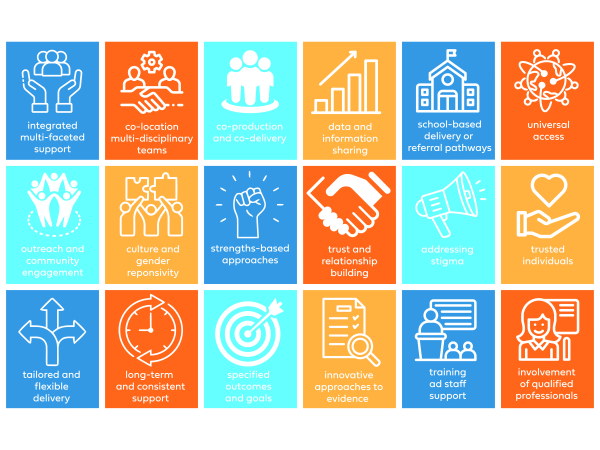
A new report, out today, sheds more light on what “good” early intervention looks like, and identifies 18 key characteristics to successful early help.
Early help and early intervention, by Eliza Ogden Barnsley and Dr Tom McNeil at The JABBS Foundation for Women and Girls, draws on academic research alongside reports from charities, think tanks and other organisations, providing a framework based on analysis of 68 early help interventions and identifying key characteristics such as co-location and trust-building.
While further robust research is needed, much useful evidence and promising practice already exist around the 18 characteristics identified, but are not always widely recognised. The review brings much of this evidence together to help build a clearer picture of what good early intervention looks like.
The 18 characteristics include trust-building, tailored and flexible support, strengths-based practice, co-location and consistency. The findings reinforce that how support is delivered matters, with these characteristics associated with positive outcomes when working in combination, rather than any single feature providing a formula for success.
This report has been written with the intention of providing a framework to anyone interested in early help, and associated commissioning, grant-giving, policy, advocacy, practice-sharing and research. It can support the development of interventions that better respond to the needs and strengths of children and families, and help community-based organisations show how their work aligns with what the evidence shows.
It notes that there is a need for further robust research to better understand the impact of early help, establish causal links and test the effectiveness of specific characteristics. The JABBS Foundation for Women and Girls is funding a novel large-scale evidence review and development of a new assessment tool, the Family Wellbeing Assessment (FWA), to evidence in real-time what makes an effective ‘early help’ whole family offer.
Though we need more evidence on ‘what works’ in early intervention, decent-quality evidence does exist. We need not wait for perfect evidence, when there are many opportunities to strengthen support for women, children, and families today.
The Government’s momentum around early intervention, including new funding and strategies focused on earlier support, creates a moment for greater action. Alongside devolution and more power handed to local areas, there is an opportunity for Mayors and local authorities to play a stronger role in early help efforts, and for local partners to pilot, enhance, and deliver innovative practice that enables more effective early help across the country.


